There are places you drive past a hundred times before you really understand what you are looking at. For a lot of North Alabamians, Wheeler National Wildlife Refuge is one of those places. You catch a glimpse from the highway, maybe slow down once or twice in December when the fields are full of birds, and think, “I really need to spend more time out there.” And you are right. You really do.
Recently on Unexpected Adventures in North Alabama, I sat down with David Young, park ranger and visitor services manager at Wheeler Wildlife Refuge, to talk about everything this place has to offer. And as is so often the case with the best North Alabama stories, there was a lot more to it than I expected!
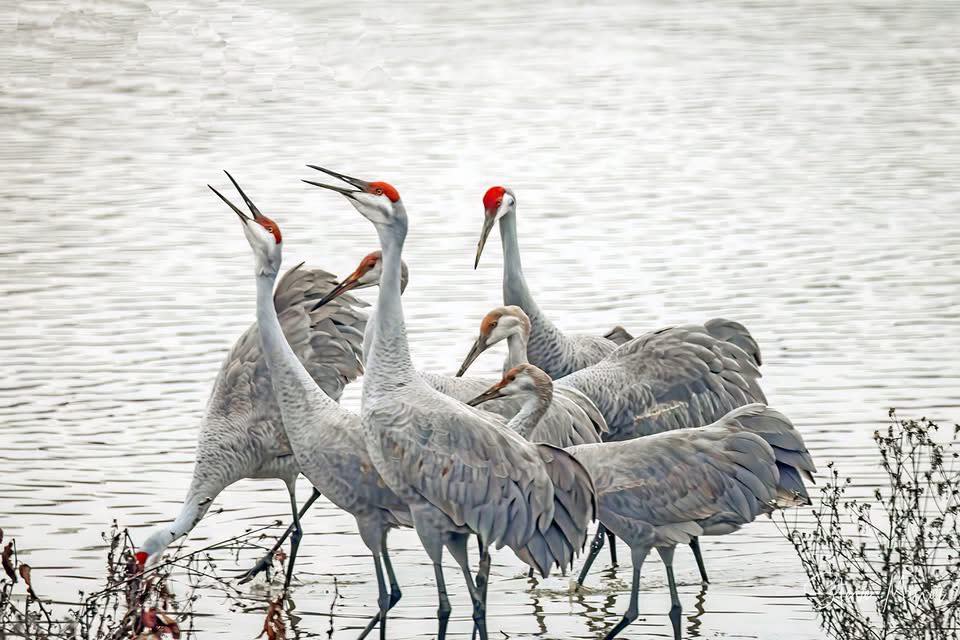
35,000 Acres of Wild North Alabama
Wheeler National Wildlife Refuge covers 35,000 acres, stretching from Decatur all the way toward Huntsville along both sides of the Tennessee River across three counties. That surprised even me. For years I thought of Wheeler as just that spot you pass on Highway 67 near Decatur. It was only a few years ago that I learned just how far it actually reaches.
David explained that Wheeler was established in 1938, born out of the creation of Wheeler Dam by TVA. It holds the distinction of being the first wildlife refuge ever superimposed over a hydroelectric reservoir — an experiment, as David put it, to provide habitat for wintering waterfowl and breeding grounds for other wildlife. That experiment worked. Today, Wheeler is home to over a dozen species of threatened and endangered wildlife, and it draws visitors from all over the country.
And the best part? It is nature, right in your backyard.
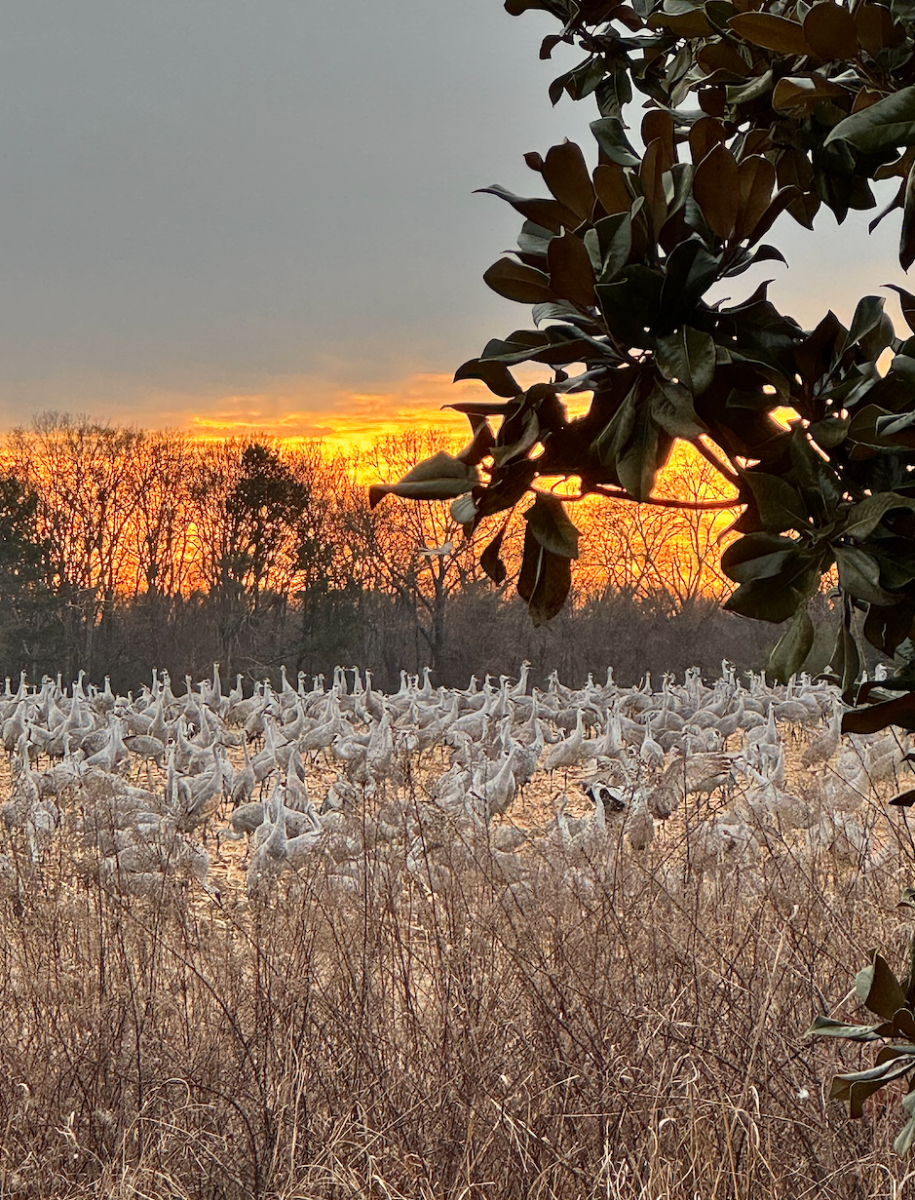
The Cranes. Always the Cranes.
If you ask anyone who has visited Wheeler in winter what stays with them, the answer is almost always the same. The cranes.
From mid-November through mid-February, anywhere from 10,000 to 25,000 sandhill cranes descend on the fields surrounding the visitor center. David described their call as sounding like dinosaurs, and he is not wrong. There is nothing else like it. It is loud and ancient and somehow both wild and deeply comforting at the same time.
And if you are really lucky, you might spot a whooping crane in those same fields. With fewer than 500 whooping cranes currently living in the wild, a sighting is something you do not forget.
I had one of those right-place-right-time moments a few winters back. I was driving through after visiting my mom out in Priceville and spotted hundreds of cranes gathered right at the entrance of the refuge. The sun was setting. People had pulled over on both sides of the road. We were all just standing there with our phones out, trying to hold onto a moment that felt almost too beautiful to be real. I almost did not stop. I am so glad I did.
That’s the thing about Wheeler. It rewards the pause.
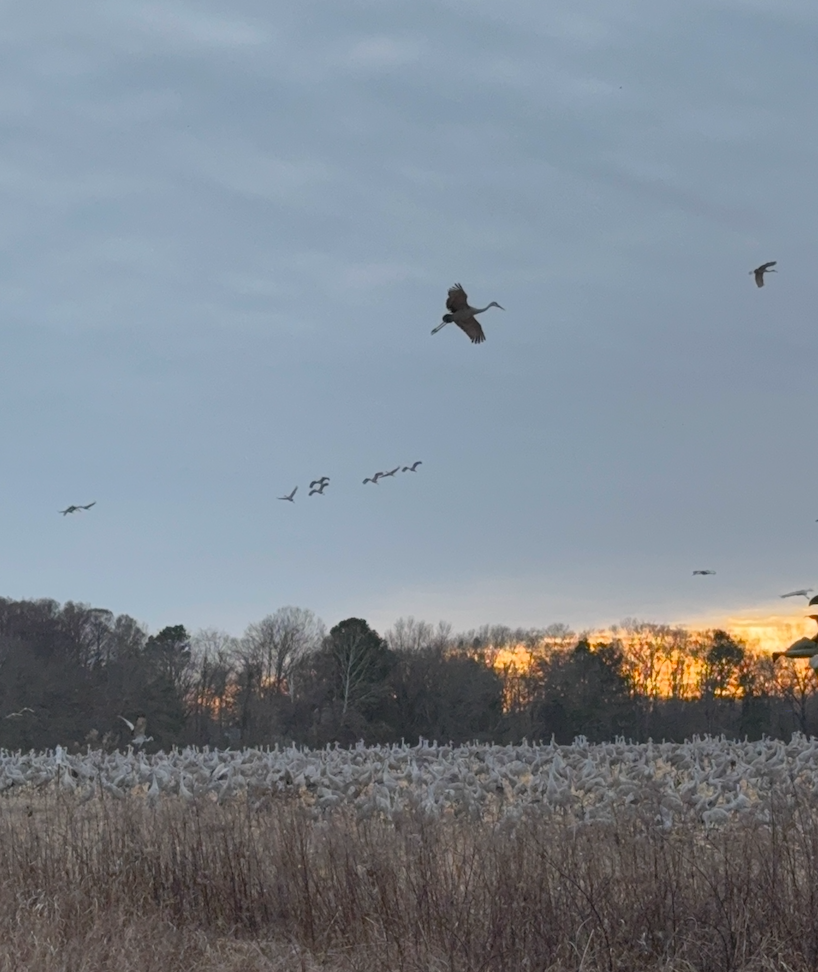
David shared a fun piece of trivia that I had never heard: cranes can travel about 200 miles a day during migration. So those birds that look so settled and at home in the fields around Decatur? They are just passing through, making the most of what North Alabama has to offer before heading back north. Wheeler has the food and environment that keeps the cranes coming back.
A little insider tip David shared: if you want to see the cranes without the crowds, come before or after the Festival of the Cranes weekend. Come for the festival events downtown at places like the Princess Theater, the Cook Museum of Natural Science, and the Alabama Center for the Arts, then make a separate, quieter trip out to the refuge. You will have a completely different experience, with both being well worth it.
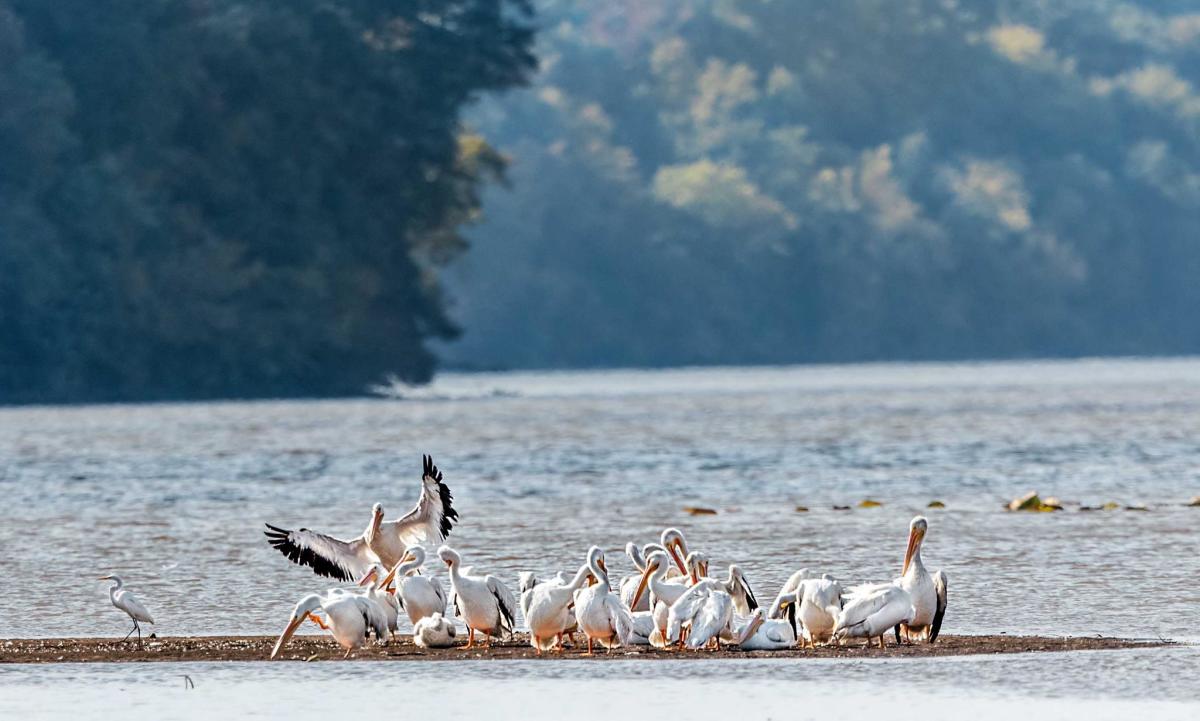
And don’t forget the ducks! David made sure I included that. Long before the sandhill cranes started arriving in the 1990s, Wheeler was already known for its ducks. They are still there and very much worth your attention.
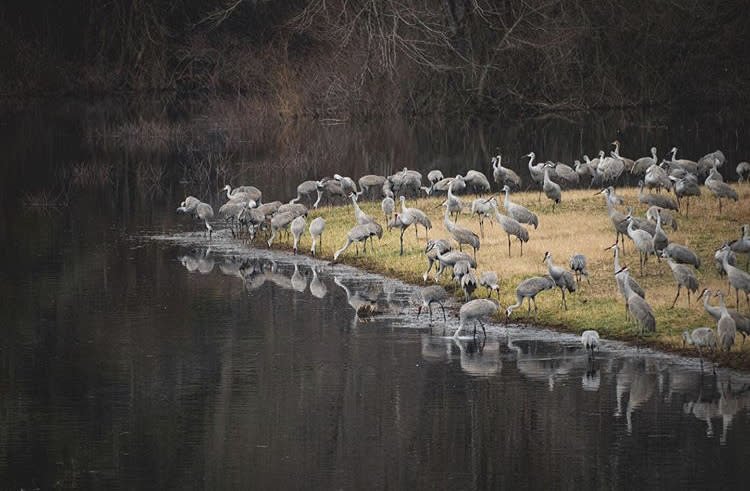
More Than a Winter Destination
This is where a lot of people sell Wheeler short. They come in January, fall in love with the cranes, and do not think to return until the following winter. But David was clear: the refuge has something to offer in every season. It just asks a little more of you in the warmer months.
Spring brings migratory songbirds returning from Central and South America, and David called April and May a fantastic time for serious birders. The trees are full of color and sound. Bald eagles are present year-round but peak in winter numbers. Osprey return in late February. And if you have not downloaded the Merlin app yet, David and I both enthusiastically recommend it! It has made birding so much more accessible. You can sit on your back porch, hit record, and suddenly realize you have been sharing your yard with ten different bird species all along
Summer brings its own surprise: bat emergences. At Cave Springs Cave on the refuge, and at Sauta Cave National Wildlife Refuge nearby in Scottsboro, tens of thousands to hundreds of thousands of endangered gray bats pour out of the cave openings in the hour after sunset. The caves themselves are closed to protect the bats, but watching the emergence from outside is something David described as incredible. He wants to see it himself. I do too.
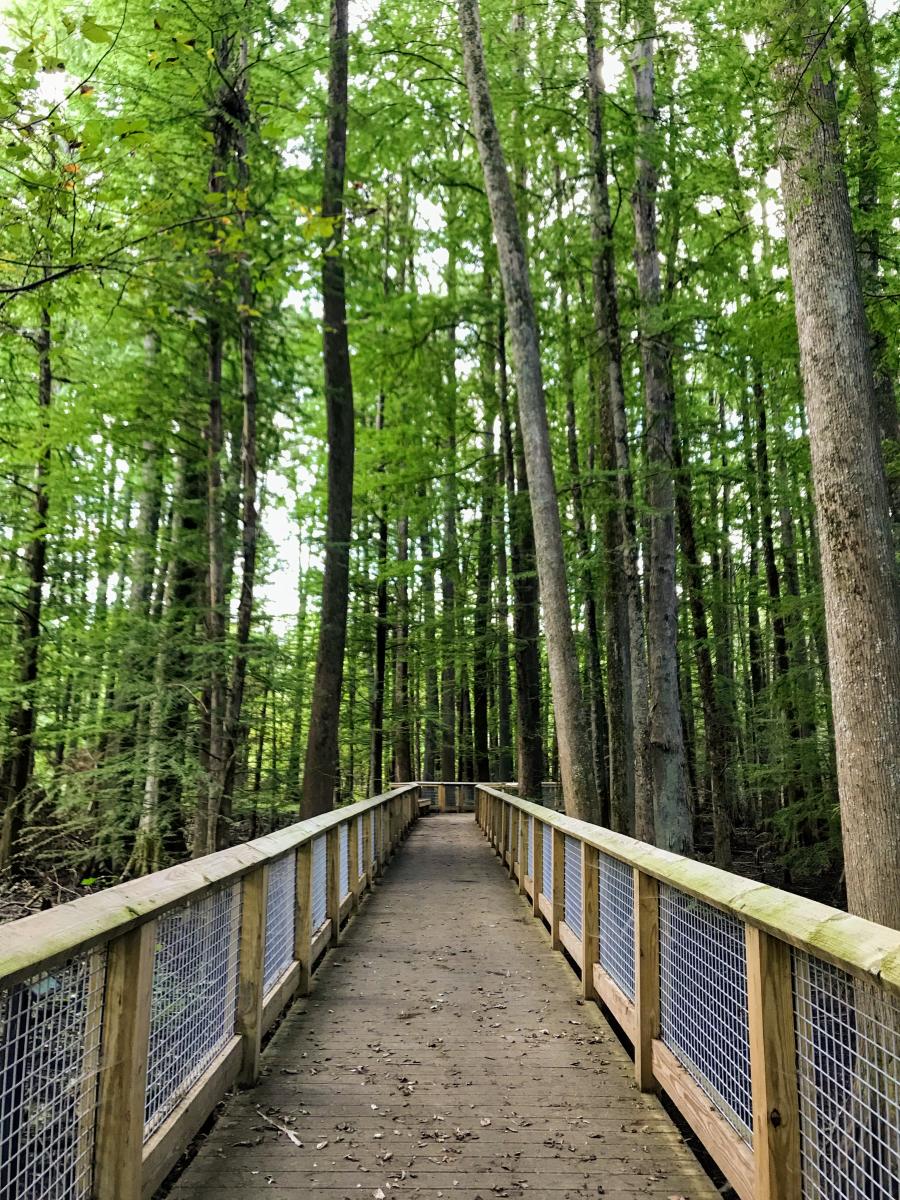
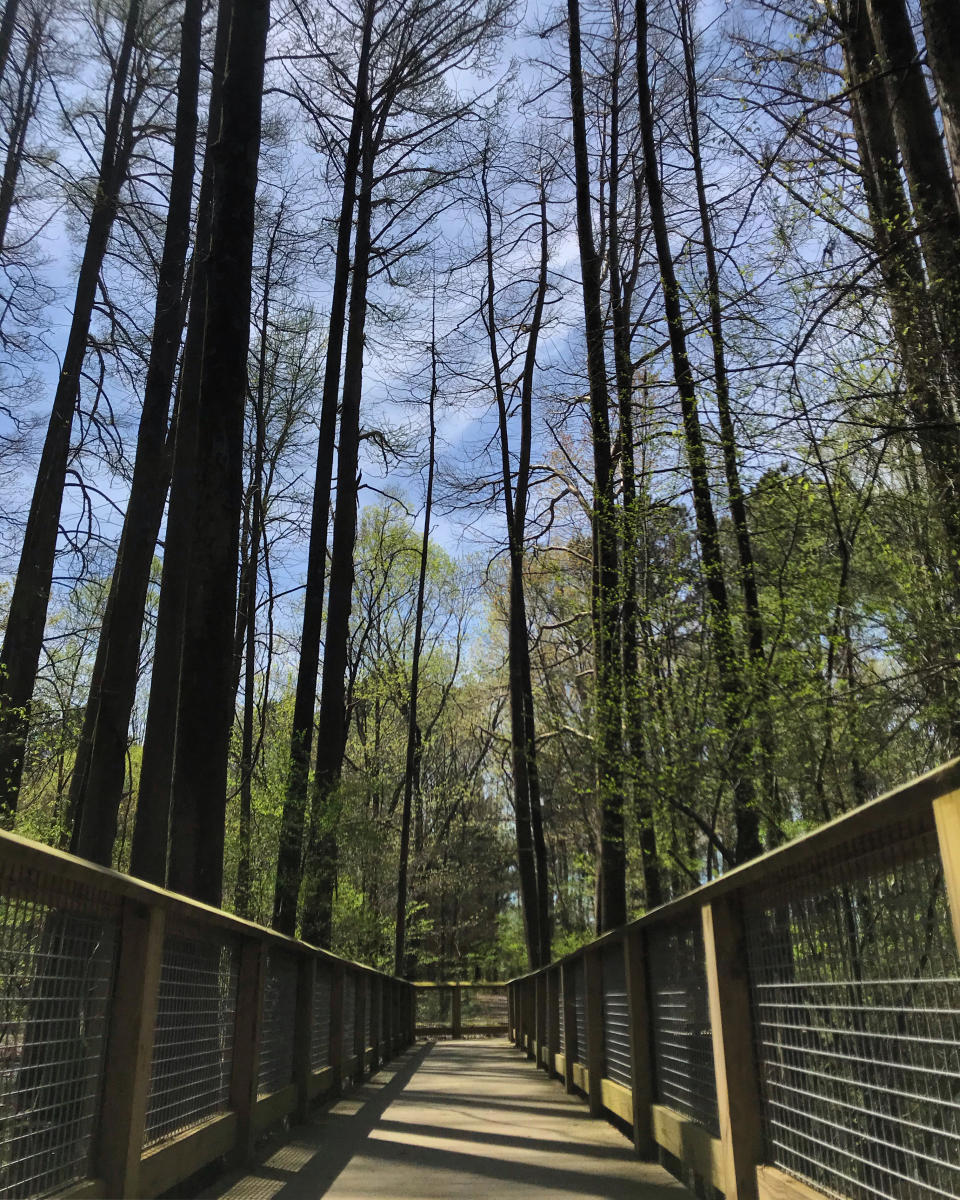
There is also the Beaver Dam Boardwalk in Madison — a nationally designated natural landmark featuring a remarkable grove of tupelo gum trees. The Dancy Bottoms Nature Trail, between Decatur and Hartselle, winds through a beautiful bottomland hardwood forest where visitors can sometimes see a nesting osprey overhead. And for paddlers, the backwaters of the Tennessee River throughout the refuge are full of places to launch a kayak and explore by water.
The refuge changes with the seasons. And every version of it is worth seeing.
The Unexpected Moment
At the end of every episode, I ask my guests about something unexpected they have experienced in their work in North Alabama. David's answer is one I will not forget.
He was driving to work one morning and pulled into the parking lot at the visitor center. Before he could even get out of his car, he stopped cold. Right in front of him, two bald eagles were locked talons-to-talons, tumbling together out of the sky.
He sat in his car for five minutes and watched.
That is the kind of thing that happens at Wheeler when you give it enough time. You cannot plan for it. You cannot schedule it. You just have to show up, slow down, and let the refuge do what it does.
David's hope is that every visitor gets their own version of that moment. And after talking with him, I think that is a pretty achievable goal.
Plan Your Visit
Wheeler National Wildlife Refuge is a short drive off I-65 and just minutes from Decatur and Huntsville. The visitor center and wildlife observation building are open to the public, and a remarkable core of volunteers and nonprofit partners help keep the experience welcoming for everyone who walks through the door.
For trail guides, a calendar of events, and everything you need to plan your visit, head to fws.gov/refuge/wheeler. You can also follow the refuge on Facebook at WheelerNWRComplex, and follow the nonprofit friends group, the Wheeler Wildlife Refuge Association, on both Facebook and Instagram.
Listen to the Full Conversation
There is so much more from my conversation with David, including how the whooping cranes are tracked and identified, why Wheeler's location makes it uniquely accessible compared to other wildlife refuges in the country, and what it means to David personally to help people discover a love of the natural world. To hear the full episode, tune in to Unexpected Adventures in North Alabama on your favorite podcast platform.
All Wheeler links are in the show notes. Go check them out, and then go check out the refuge!